
A Pumped Up Estate Sale

Happy Memorial Day, y'all! I hope that you enjoyed the unofficial start to summer by sitting on a boat, beach or balcony and that you are sipping on an ice-cold beverage or munching on a fresh slice of watermelon! While I bask in the blissful sunshine today, I hope that you and I never forget the sacrifices of the brave men & women in the military who fought to protect our country and keep us free – especially those who paid the ultimate price.

Rather than publishing a typical post here or on my sister site, Grocery South, I decided to focus today's efforts on a recent estate sale I paid a visit to.
Estate sales are a frequent weekend adventure for me given their abundance, diversity, and intrigue. I never know if this week's sale will be in a multi-million-dollar mansion or a mid-century ranch; both have benefits to offer. On the one hand, many of my nice furniture purchases have been from the mansions (I love a deal on good antiques), but on the other, the fossilized time-capsules out there act as a museum where I can touch anything and buy everything. There is nothing better than scoring a piece of Publix packaging from the early-1990's . . . (or an A&P spice jar from the '70s full of ginger and bugs).
The sale I happened upon this weekend, though, was different. It was first of all well outside my normal travel radius. It only caught my attention because I started my search at a different computer than usual. It was love at first sight.
 |
| Just a sampling of the items. |
Once I saw the sheer quantity of gas and oil related items strewn about the woods, I knew I needed to go out of my way to see this. There is a reason why it was "regionally featured."

I arrived at the typical-looking ranch house on the outskirts of Atlanta. The street perspective of this place is not what I was expecting for a gas memorabilia hoarder.

I parked my car and approached the garage only to be greeted by a vintage buggy from A&P. I cannot say I had that on my bingo card!

The garage itself was cluttered, but it featured two prominent Gulf road signs from the late-1980's. These were sold as a set for $800 and were quite large compared to what one would think driving down the road. Using the 5-gallon bucket for perspective, these were roughly 5' tall!
The biggest intrigue, however, stems from the fact that the sign background is dark green. Thinking back to my BP post from May of last year, you'll recall how British Petroleum acquired the Gulf stations in the Southeast as a condition from the Federal Trade Commission. Gulf was attempting a sale to Chevron, but anti-trust laws prevented both companies from merging in the Southeast. This resulted in BP redecorating Gulf stations in Georgia, and elsewhere, with BP green during the late-1980's as part of a short licensing transition period for the brand. It was nice to finally see one of these odd pieces in person!

The garage otherwise featured a few odds and ends, like these metal signs for a free car wash at the Gulf on SR 74. The owner of this house had some affiliation with that former Greene's Gulf station and the seller's pricing bias reflected this.

That old Gulf station interestingly still stands and operates as an Amoco.

Leaving the garage, I found my way to a pole barn just behind the house. The place had crap strewn everywhere. Some of the items included gas station canopy lights, various tractor parts, half of an old bicycle, and three blue "o" channel letters. Maybe these were from an Amoco station?

Amongst the junk, I found this old Fina pump advertising the "Genesis" fuel detergent on the door and KitKat bars on the nozzle. It was fun seeing branding for these oil companies which haven't resided in Georgia for over 25 years.

Fina wasn't the only company to utilize pump handles for advertisements around the turn of the Millennium. Just past the pole barn stood a colony of crusty multi-product dispensers from the late-1980's or 1990's, several of which possessed Gatorade ads on their nozzles.

Notice how all of these units differ from the pumps we see today in that they used separate hoses for each fuel grade, lacked a credit card reader, and required the user to flip a handle to make a product selection.

Taking a closer look at this Gilbarco, we see how the process of getting gas once required a pictogram to explain each of the five steps involved.
We also see the fuel grade branding used by Conoco circa 1993. (Yet another brand that has been virtually gone from Georgia for over a decade.) It appears that the company ceased marketing its "XVP 2000" detergent additive around the time operations were merged with Phillips 66 in 2002.
I'll also point out the Georgia Department of Agriculture inspection tag. Normally, the listed commissioner can help provide context for the age of the pump; however, Tommy Irvin happened to be the longest serving commissioner of agriculture in the United States. He held the position from 1969-2011 and was obviously not subject to term limits of any sort. His 10th and final election was in November 2006, making him one of the last state-wide elected Democrats before the infamous election of 2020.
 |
| Courtesy of Kyle Lockhart (Facebook) - October 2025 |
What baffled me was the fact that Conoco's livery of the time primarily consisted of blue rather than red. There is course the red (and yellow) accent striping in the bottom right corner, but the whole design makes me think of a modern Southwest plane rather than a gas brand.

Very few images from this era of Conoco appear online which seems odd given the state of the modern internet. In any regard, I did find one black-and-white photo of a lady filling her truck at a Gilbarco Highline in 1998 and another image showcasing a Conoco-turned-Crown station in North Carolina.

Returning to the cluster, I noticed how these Highline MPDs utilize the same head controller as the single grade pumps. That's quite the resourceful use of modular technology during this time of transition.

One of these pumps also had an old Georgia Lottery sticker on the side featuring the 1993-2007 logo.

In addition to the Conoco pumps, there were several pump toppers from Amoco stacked in a pile. I'm guessing these were once paired with the mystery pump 8 situated off to the side.
 |
| Courtesy of Estatesales.net |
I suppose that mystery will live on for another day.

Likewise, the other side of the barn had several old Gilbarco Highline door panels advertising Phillips 66 and Fleet branded gas.
 |
| Courtesy of Estatesales.net |
I've personally never heard of this Fleet brand. Have any of you?

Speaking of Gilbarco, one of the Highline single-grade pumps was lying on its side nearby.
 |
| Waco Tribune-Herald (Newspapers.com) - April 29, 1980 |
I would imagine that these pumps were pretty revolutionary for their time because they were some of the first computerized and digital models to be introduced. Gilbarco's new computer system could remotely operate pumps from within a convenience store allowing attendants to remotely enable, disable, or ration fuel sales.
 |
| Notice the parallel computer port on the pumps face for programming and control. |
Today, these pumps are little more than a relic of the past with only the occasional model found repurposed for selling off-road diesel or kerosene at a country store.

Turning toward a clearing in the woods, I spotted an old car wash mechanism rotting away with some scrap metal framing. Why was this kept and how did it get here? Did this guy service nearly anything to do with a gas station or did he just collect random petroleum paraphernalia?


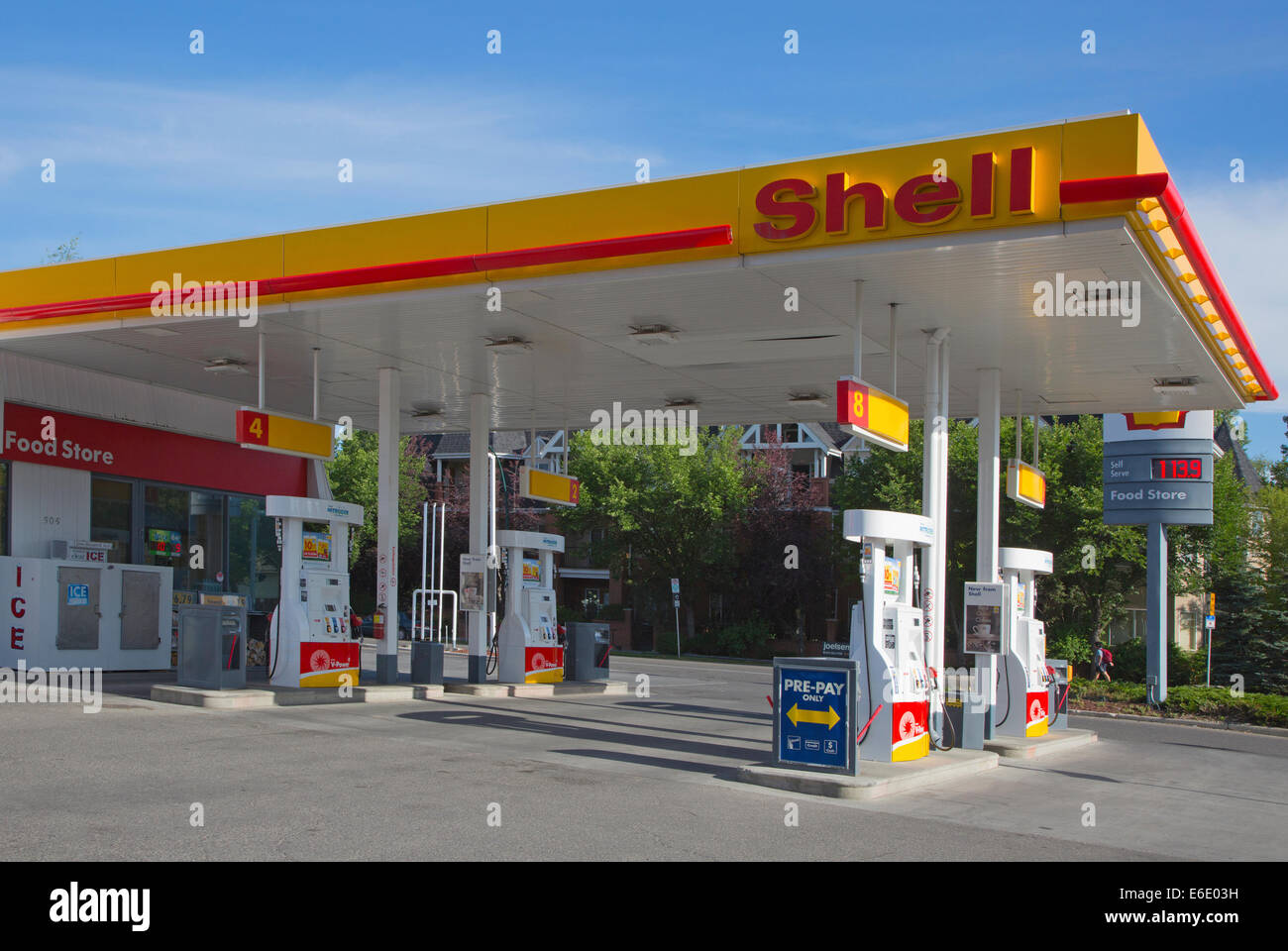
My next stop was at the garage of a separate house next door. Mind you, this garage was still part of the same estate sale, its product mix was mostly just confined to excess car parts, model cars, and other, more typical collector's items. The main piece that caught my eye was this letter "e" from a 2000's Shell canopy sign. It appears to have never been installed outdoors and lacks the typical neon tube inside. Retail Retell's love for Shell instantly came to mind so I gave him a call to see if he wanted it. He appreciatively said yes while thanking me for thinking of him.

Following this garage, I stumbled upon this 1948 Chevrolet sitting amidst the trees. It was one of roughly 17 vehicles sitting on the property, including: a 1956 Buick Century, a 1984 Buick Electra, a 2008 GMC Box Van, a 1994 Ford Aerostar Van, a 1998 Ford 450 Diesel, a Ram 350 Dump Bed, a 1988 Chevy C30, a Boom Truck, a 1982 Sierra GMC, a 1982 GMC Custom Deluxe, a 2017 F450 Boom Truck, a 1982 GM, a 1972 Caprice Classic, a 1966 Dodge Seneca, a Dodge Aspen, and a 2005 Sierra GMC 2500.

The next car appears to be the Chevy Caprice, but I could be totally wrong. It is flanked by a stack of de-branded pump toppers from a RaceTrac station.

These pump toppers appear quite large when sitting on the ground.

Several of the other RaceTrac toppers still had branding, but the BP topper nestled over here is what really caught my eye. This particular one was missing the opposite branded panel for some reason.

I quickly realized that it came from a larger adjacent pile of its brethren.
When viewing these pictures online, I first thought this was a stack of some strange gas pump I had never seen before.

It was only after spotting the two larger specimens on the right that I realized they were a part of my beloved "futuristic" station design of the 1990's.

The inside of these, likewise, was filled with a fluorescent lighting fixture to illuminate the plexiglass panels at night. I knew that I couldn't leave without one.
 |
| Courtesy of Estatesales.net |
I quickly found another cluster of newer MPD BP pumps from the 1990's and figured that they must have come from the same place.

I want to point out how each BP pump handle featured the shield logo and how BP's fuel grade names were different during this era compared to what we find today.

The "Plus" and "Super 93" grade monikers were phased out as part of the 2000 Helios rebrand when BP adopted Amoco Fuels descriptor. This falls on the heels of the two brands merging in 1998 and was performed as a way to unify the two companies under a singular new look. Amoco's Silver mid-grade and Ultimate premium brands went on to replace BP's previous grades and continue to don pumps to this day.

Continuing on with the BP finds, I discovered this BP Car wash sign under a different barn. Had the sign not been 6'-8' wide, I totally would have taken it home!

As indicated by the sign permit, this particular advertisement hung atop a building in the north Atlanta suburb of Roswell.

What's even more interesting his how parts of the sign began to reveal stripes of blue, red, and orange paint below, showcasing how that station was once a Gulf outlet.

Two of the unpainted Gulf panels survived elsewhere on the property.

Trekking further into the forest, I found a pile of old glass drink bottles scattered on the ground. One of them happened to house a natural terrarium full of algae, moss, and a live fern. I picked up the bottle only to discover that all of the plants were self-contained, to boot!

Past the bottles and Miller Lite cans was what I refer to as the "Gas Pump Graveyard." The woods on this section of the property were littered with gas pump skeletons mostly dating back to the '60s, 70s, and '80s.

Mixed in the cemetery were numerous pumps and doors from Chevron, Texaco, Gulf, Spur, and BP, just to name a few. I couldn't resist snagging one of these BP-branded doors for myself.

Upon my final loop around the 14-acre property, I considered identifying the model of pump my BP door came from. I snapped this quick picture of a nearby unit which seemed to match the specs, yet I neglected to check for a name plate.
I then got on a tangent trying to get AI to identify this pump brand while I was writing this post . . .
 |
| Courtesy of Estatesales.net |
Copilot's response was that the unit was a Tokheim 262 pump. The two share similar characteristics; however, the Tokheim (pictured above from elsewhere on the property) includes several slight differences. I don't care to highlight them in the interest of not giving AI a better answer next time.
Meanwhile, Gemini told me that the pump #5/6 in my photo is a Southwest Pump Company 4000 series. When I pressed the computer to provide me with a different picture or source information, it happily rejected to do so.

Instead, it drew this generic character graphic and told me that product images or manuals from the 1980's are hard to find on the internet. I'm quite skeptical of its answer.
Anyhow, that will simply remain a mystery to me.

It is crazy how many pump parts were strewn about the woods, including this door panel located several hundred yards from any compatible bodies. I attempted to buy this guy but was promptly denied since it "belonged to a gas pump." It sure did one day, but good luck finding that pump now!

Likewise, I then tried to snag one of these smaller and slightly rusted door panels only to be, again, rejected. Maybe I should have tried to buy a whole pump! (If only I had somewhere to put it and some way to haul it.)
Given the history, I believe those adjacent BP doors were once Gulf-branded as well.

Take a look at the old Underwriter' Laboratories seal of approval on this Southwest gas pump! This Southwest model is specifically labeled "G.O.C." (which obviously stands for Gulf Oil Company) and seems to be a variant of the ETA-1. It's interesting how the oil giants had custom-made pumps back in the day; I wish I had taken more time to document the makes and models I saw!

This photo brings up the discussion of leaded versus unleaded gasoline. Tetraethyllead was introduced as a gasoline additive during the 1920's to prevent engine knock and increase fuel octane.
 |
| Camilla Sing #2 |
I further discussed Ethyl leaded gasoline in my Camilla #2 post several years ago, but the gist of it is that unleaded fuel was introduced into the United States in 1975 to combat airborne lead pollution. It became the only fuel option sold in the country by 1996.

The Gulf pumps seen here likely date back to the 1970's and currently feature their 1980's livery. I can see where some older orange paint is beginning to peel through the white faceplate trim.

The boneyard continued with a host of Texaco pumps from the 1970's. These were sadly missing most of their faceplates.

I believe this Texaco plate had at least one other brand present atop its original Gulf blue. I love how somebody just slapped a bumper sticker for Texaco's Clean System³ over the original red paint.

Continuing with the Texaco theme, I stumbled upon these old door panels for pumps that probably dated back to the 1960's. Both feature decals from at least the 1970's and the one on top was swapped from unleaded gasoline to diesel at some point.

Texaco's famous Sky Chief premium gas was once sold from this pump.

Next up on the oddity list is this Gasboy pump. I have no idea what all of the keyed controls on top were for, but I do believe the "Speed limits save it!" decal was installed as a result of the 1970's gas crisis.

I also found a flock of Chevron pumps advertising the company's former detergent additive, Techroline. Chevron debuted Techroline in 1985 as a response to pressure from major automobile manufactures around that time. General Motors Vice Chairman Howard H. Kehrl wrote a letter to the large oil companies stating that a sufficient amount of detergent was not being added to fuels and that the effects were detrimental to automobiles. He stated that the oil giants needed to increase detergent rations in order to prevent fuel deposits from clogging modern fuel injector systems. What was even more damning, though, was the fact that Mobil was already including sufficient detergents in its fuel and it was the only petroleum company noted in the letter for not selling "bad gas."
 |
| Arizona Daily Star (Newspapers.com) - September 29, 1985 |
Gasoline detergents, such as the modern-day Techron (Chevron & Texaco), Invigorate (BP & Amoco), or STP (Marathon), may differ by fuel brand, but the gasoline filling your tank is identical regardless of which station you purchase it from. As this 1985 article states, nearly all gasoline for a region travels over the same pipeline network and comes from the same refinery. It is only once it is unloaded at the tanker when different detergents are added magically "morphing" it into Shell or RaceTrac fuel.
The thing is, though, that virtually any Top Tier approved gas will have an equally effective amount of detergent and that all fuel detergents have negligible differences (despite an oil company's best marketing attempts). What matters is the amount of detergent added to the mix, and all major gas brands now typically include a sufficient quantity unlike in the mid-1980's.

Hopefully these conversations about the commoditization of petroleum didn't spur anyone on, but I promise that I'm nearing the end of my soap box. I just figured I needed to complete this post while I'm still pumped about my recent trip.
We'll take one quick look at this stack of Spur gas pumps before heading back to the shop.

Back up front, there was one last garage that I missed on my first loop. It housed an old pickup truck and several newer MPD pumps from an unknown yellow brand. The biggest thing that caught me off guard about this was an advertisement claiming that "Hondas don't come here often." I had to take a closer look before I realized it was an ad for North Georgia Honda Dealers. Doesn't it seem ironic to boast about fuel efficient cars on a gas pump?

Also inside this garage were a few nicer examples of Gulf pumps.

That decal is in quite good shape!
 |
| Courtesy of Estatesales.net |
Furthermore, these strange gas pumps are still going to haunt my dreams until I figure out who made them!
After spending several hours exploring and another day recapping the experience, I'd say I'm quite tired. Then again, the adventure was totally worth it and now I feel like I've lived through my own episode of American Pickers.

Following my purchases, a friend asked me (in a disgusted and judgmental tone) why I suddenly bought several BP signs given typical affection toward grocery stores. I thought to myself, "wow, this person really doesn't know me and has obviously never read my blog."
The truth is that gas station branding has captivated my attention for far longer than supermarkets have. My love for Publix branding sprouted from my love for gas and oil items. The choice of BP also shouldn't come as a surprise given how the company was the heir to and executioner of the Sing Oil name. I am also quite fond of the design choices made by the brand during the 1990's.

I'll close in saying that I'm very glad I was able to save a piece of this look for myself, and I hope that you know what this week has taught me: never let anyone rain on your parade and never let stormy weather keep you away. It was quite wet during my trek through the woods!

My lunch stop of the day at least gave me a chance to dry off – it was at none other than Truett's Luau in nearby Fayetteville. For those unfamiliar with the concept, it is a special Hawaiian-themed Chick-fil-A featuring a sit-down dining room and a wide array of extended menu options.
It used to only be at special Atlanta-area restaurants, like this, where one can order a beef hamburger at CFA, but now Truett's Luau has become the only proper restaurant where you can find a burger or mahi-mahi fish tacos. Chick-fil-A previously served burgers at its Dwarf House restaurants around Atlanta but now has confined the dish to only be found at the Luau and a concept kitchen in Maryland.

I ordered the fish last time I came, so I decided to go with the pineapple grilled chicken tacos this go-round; they were delicious. Topped with chunks of pineapple and drizzled with the special tropical volcano sauce, they simply left me wanting more! I also couldn't resist dipping my sweet potato waffle fries in Chick-fil-A sauce.
As I've said before, never miss a chance to explore the world around you, and most importantly, happy Memorial Day!
Until next time,
- Sing Oil Media


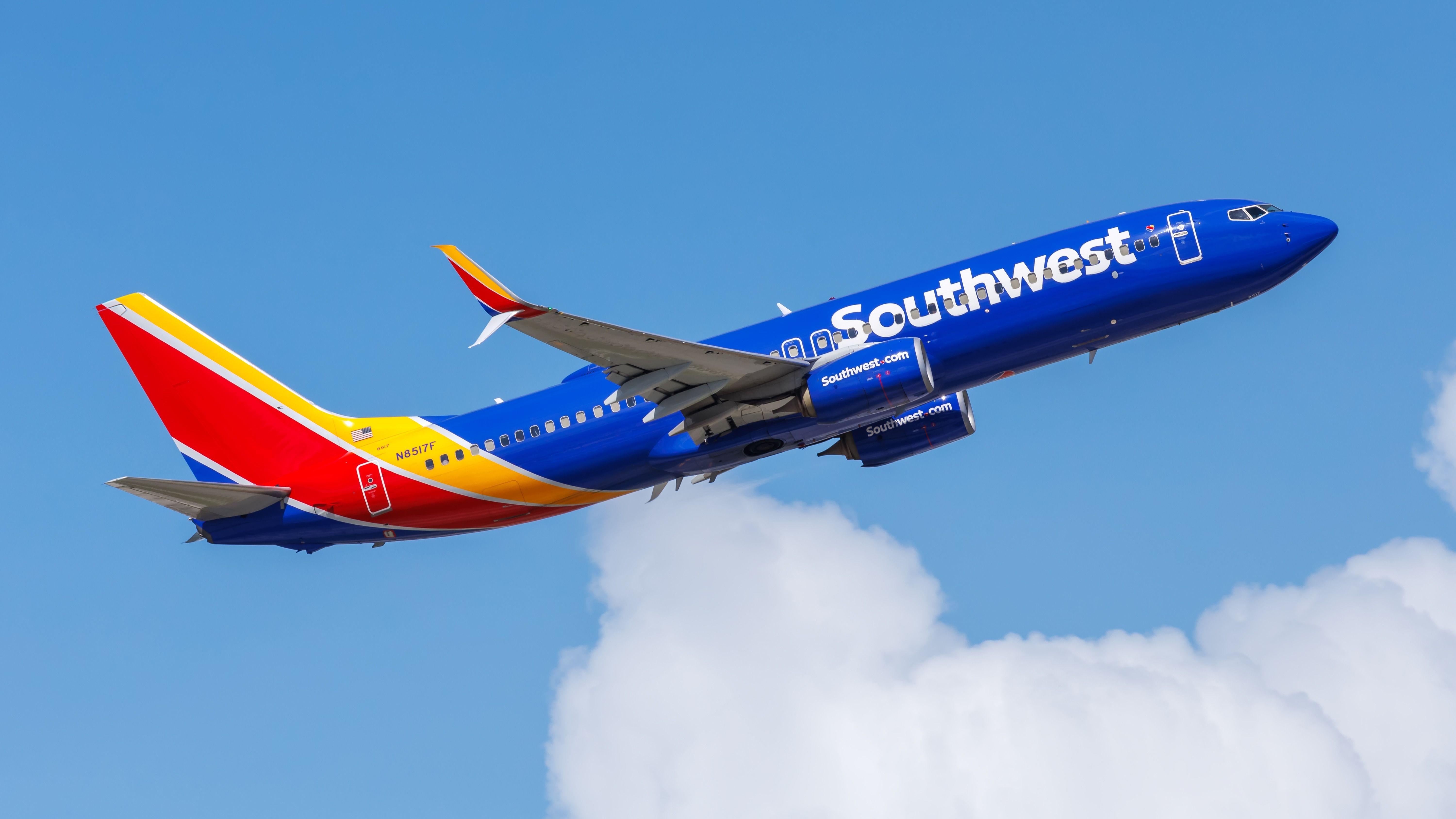

This is a very interesting post. That Conoco pump is very odd. If I didn't know better, I would have thought it was an old Southwest relic!
ReplyDeleteThanks, I'm glad you liked it! That Conoco pump was very strange to see!
DeleteWow, that's a lot of gas pumps - Mike and Frank certainly would have loved to stumble upon this place! I'm surprised you didn't ask any of the people running the sale for a little background on who lived here and how that person acquired all these pumps. I'd have to guess the person who lived here must have serviced/replaced gas pumps for a living, otherwise I have no idea how someone acquires gas pumps in such a quantity! It would have been interesting if you stumbled across a piece from Sing at this sale, but there was still quite a bit of other branding to see here. Glad you were able to salvage a few pieces of BP memorabilia though, as I've always been a fan of that era of BP branding too.
ReplyDeleteSeeing all these old gas pumps made me think of a gas station we stopped at in Kingsland, GA back in 2012, a cheaply-debranded Amoco which still had the manual 1970's style single-grade pumps. I was shocked that station still used those pumps that late (I remember the price at the time had to be input as by the half-gallon, as the pump's top price of $1.99/gallon was maxed out), and amazingly, that station (per streetview) kept those pumps active until 2021! See here: https://maps.app.goo.gl/2X83wMc4fjMqkPLz5
Lastly, Chick-fil-a sweet potato waffle fires sound really good...
Definitely agree on the sweet potato waffle fries -- can I get some of those with my Shell letter "e"? :)
DeleteI would have loved to see Mike and Frank picking through this guy's back yard! There were some neat finds and some that I wish I had more space for. You make a good point about me not asking for more background information because that is usually something I'm good at! I guess my head was in a different space than when I'm browsing an endangered supermarket or something similar. I just figured he replaced pumps as well, and he had a particular tie to the old Gulf station by the interstate. I am still very glad I got those pieces of BP branding and they cleaned up quite well!
DeleteWow, it is crazy to think of a gas station selling fuel by the half-gallon due to its pumps being so old! I'm surprised you even stopped there because I would've been more likely to go to a newer station! Regardless, I would have gone there seeing those old Amoco pumps from the road. They seemed to be in great shape! I would have loved to get a picture!
Those sweet potato waffle fries were really good! Retail Retell, I'll buy you some if you come back to visit!
That cart looks like a United Steel & Wire unit. It looks to be at least from the mid to late 1970s at the oldest judging by that A&P logo on the handle trim. The seat flap is kind of strange; it looks like a Technibilt/Cari-All flap and could be a replacement as they normally had rectangular seat flaps (which only had the A&P logo on them).
ReplyDeleteThe 1970's would make sense and I bet this person got the cart sometime in the 1980's or 1990's. A&P left Atlanta in the late-1990's so it is possible it lasted until the end.
Delete